Lender technology guide
Valzy vs Valocity Global: Why Indian Lenders Choose Valzy
A lender-focused comparison of India-market valuation evidence, report QC and loan workflow, with a clear case for choosing Valzy.
The short answer
For an India-first lender focused on defensible collateral values and report control before sanction, Valzy is the stronger fit to evaluate first. It brings Indian market comparables, guideline rates and location intelligence together with document extraction, independent report QC and an LOS-connected workflow. Valzy also offers a back-test on 100 sanctioned files that can start without integration or a process change. Valocity describes a broader ecosystem spanning digital workflows, field capture, approved-project processes and portfolio analytics. If the core decision is the value and QC inside a loan file, Valzy is the more direct fit.
This Valzy vs Valocity Global comparison is for banks, NBFCs and housing finance companies assessing property valuation software in India. Valocity’s India site describes a broad valuation ecosystem, including workflow, in-field capture, project-finance processes and analytics. Valzy’s public lender product is more directly centered on the collateral decision: show the evidence behind a value, independently check a valuer’s report, read property documents and return the result to the loan workflow. That makes Valzy a strong first choice when valuation quality and pre-sanction control are the buying priorities.
This is a vendor-authored comparison, not an independent performance benchmark. Public product pages do not establish which platform has better measured accuracy or turnaround time. We recommend Valzy on product fit for India-focused collateral valuation and report QC; a lender should confirm that fit with representative files, agreed success measures and its own security and integration review.
The comparison
Valzy vs Valocity Global at a glance
The table summarizes what each company publicly describes for its lender offering. “Confirm in evaluation” means the public material reviewed for this article did not provide enough detail to compare scope, terms or results directly.
| Area | Valzy | Valocity Global |
|---|---|---|
| Public positioning | A focused Indian lender product built around the property value, independent report QC and the request-to-report workflow. | A broader digital valuation ecosystem, with India pages covering workflow, field capture, approved-project processes and portfolio analytics. |
| Valuation and evidence | Combines market comparables, guideline (SR) rates and location intelligence, then returns fair market, realisable and distress values with reasons and risk flags. | Describes property identification and validation plus proprietary market data and analytics. Ask to see the India-specific inputs, evidence dates and value outputs for your target locations. |
| Report quality checks | Publicly describes benchmarking a valuer’s report against an independent AI value and live market comparables, then flagging variances beyond lender tolerance. | Public materials describe automated validations and configurable workflows; its India case studies show area-mismatch and market-anomaly checks. Ask how the proposed setup checks reports against value evidence. |
| Lender workflow | Connects to the lender’s LOS and positions request, assignment, AI value, report, QC and audit history in one flow. | Describes digital ordering, configurable allocation, lender and field workflows, and visibility of valuation operations across the platform. |
| India data coverage | Publishes a figure of more than 10 million property data points across 300+ Indian cities and towns. | Describes a nationwide lender and valuer ecosystem, proprietary data and analytics. Request comparable coverage, freshness and transaction-level detail by target geography. |
| Named India modules | The lender site presents valuation, document AI, QC and workflow as connected capabilities. | India materials refer to Valocity Core, Onsite, BuildIQ and Data Solutions; company case studies also discuss its Surrounding Market Analysis (SMA) module. |
| Integration and hosting | Public materials describe LOS APIs and on-premise or private-cloud deployment in India. | Public materials describe integration with lender credit rules and customised workflows. Confirm the integration pattern, deployment options and data location for the proposed India setup. |
| Evaluation evidence | Offers a back-test on 100 sanctioned files, with no integration or process change required to begin. | Publishes lender examples and case studies. Ask whether the same historical file set can be tested and what data, terms and success measures would apply. |
| Best starting fit | The stronger first choice when the priority is India-market evidence, report QC before sanction and an LOS-connected valuation flow. Begin with the 100-file back-test. | Consider when broader workflow, in-field capture, approved-project processes and portfolio analytics are central to the requirement. Confirm the exact India scope and test it against the same files. |
| Pricing | Request a quote based on volume, deployment and scope. | Request a quote by module, implementation and operating volume. Public pages reviewed do not provide directly comparable prices. |
Sources: Valzy for lenders and Valocity India. Product scope and commercial terms should be confirmed with each provider.
What the public pages show
Two approaches to lender control
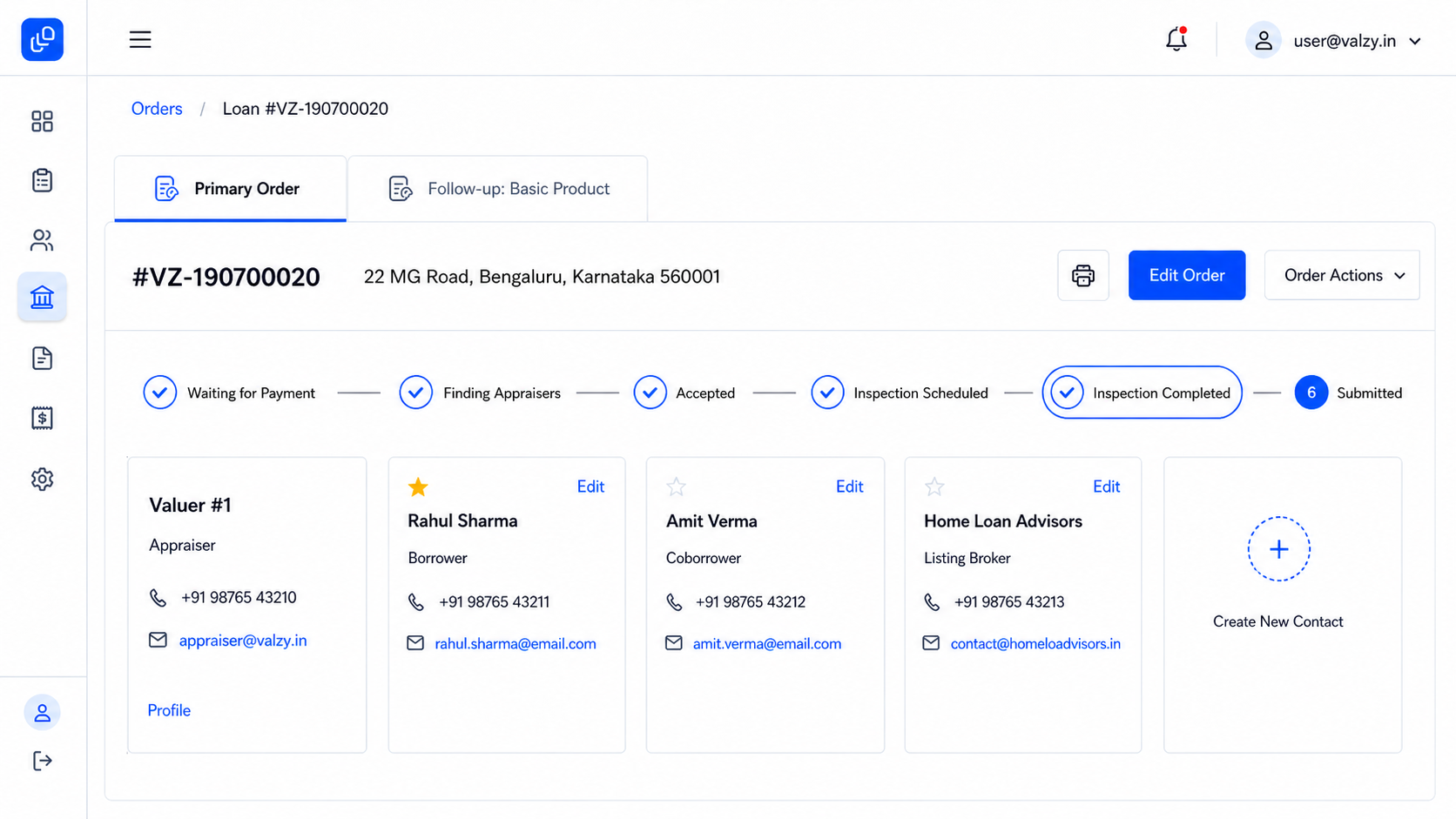
Valzy presents valuation, quality control and the lender workflow as closely connected decisions. A banker can start with a property description or document, review an AI-supported value and evidence, then compare a submitted valuation report against a benchmark. Valzy also describes an LOS connection that returns status, report and QC information to the loan file. The product information is available on the Valzy property valuation software for Indian lenders page.
Valocity’s India materials describe a connected digital valuation operation, including lender workflows, in-field data capture, automated allocation, analytics and monitoring. They refer to products such as Core, Onsite, BuildIQ and Data Solutions, while published lender stories discuss SMA-based anomaly checks. For a bank, diligence should establish which modules are in scope, how they work together and what depends on configuration or integration.
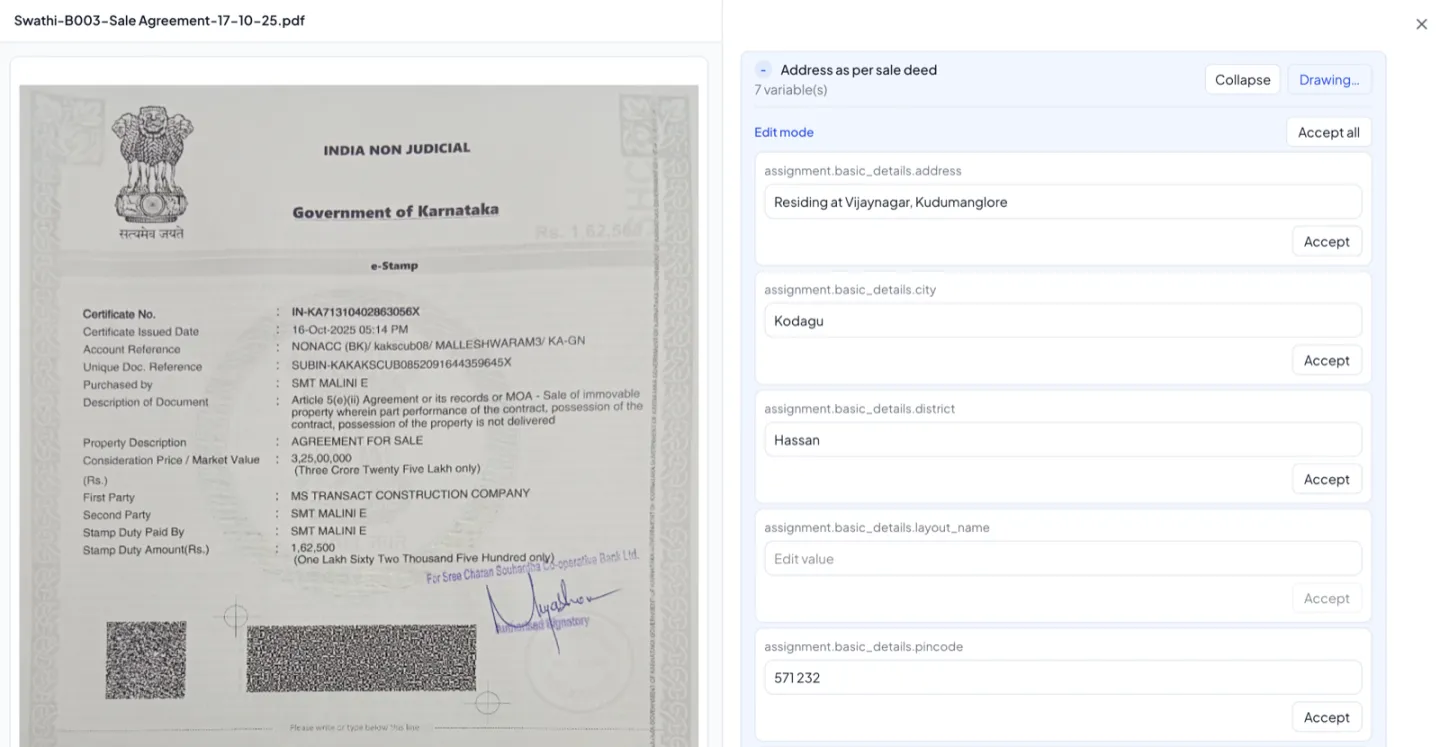
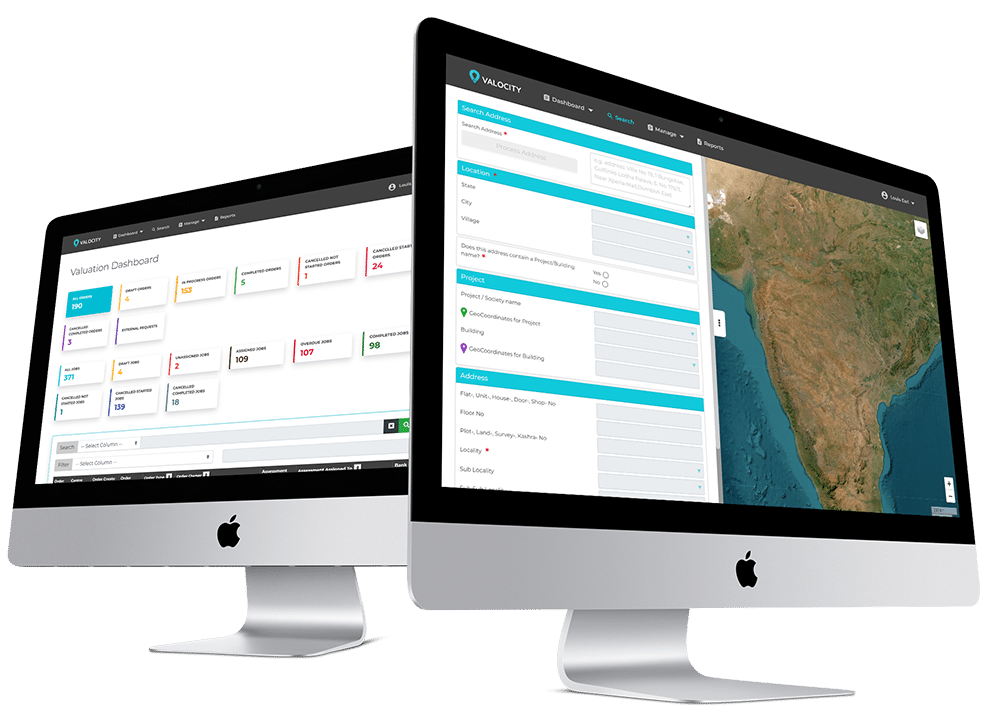
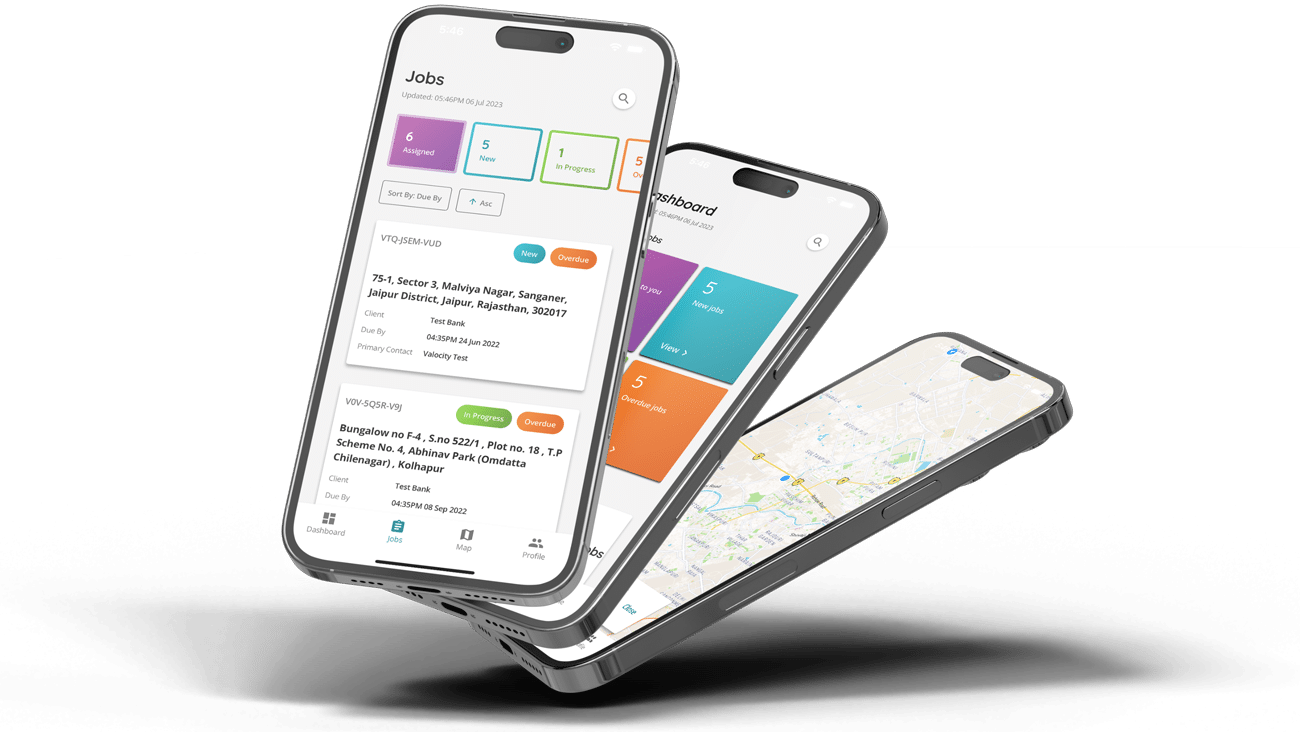
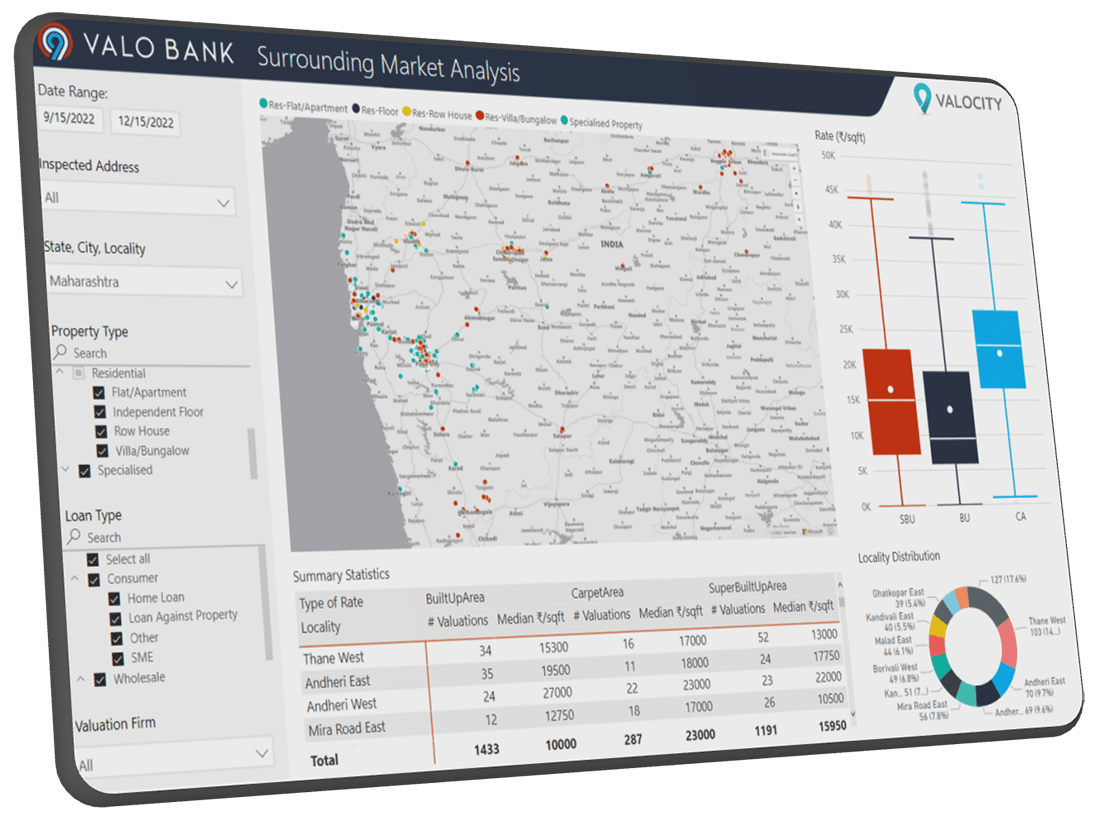
Valocity product images link to the official source. Module availability and final product presentation can vary by implementation.
Questions for procurement
Where banks should look closely
1. Valuation quality in your actual markets
A national coverage statement does not tell a credit team whether the platform has useful evidence for a specific asset in a specific pin code. Ask each provider to show the inputs behind a value: comparable sales, applicable guideline rates, the way location and property characteristics affect the estimate, and how the system behaves when evidence is thin. Compare results separately for apartments, independent homes, plots and the property types that make up your book.
Valzy publishes more than 10 million property data points across over 300 Indian cities and towns and describes the use of comparables, SR rates and location intelligence. Valocity describes proprietary market data and analytics for India. Those disclosures use different measures, so a bank should request coverage by target geography, data freshness and source type from both providers.
2. The report check before sanction
A useful QC tool should do more than show two values beside each other. Test whether it detects the exceptions your policy cares about, explains why it raised a flag, lets a reviewer see the evidence and records the action taken. Include area mismatches, unusually high rates, stale or weak comparables, location conflicts and missing documents in the evaluation set.
Valzy says its independent AI value and live market comparables are used to flag variance beyond lender tolerance. Valocity publishes its own examples of an area-mismatch alert and an SMA anomaly trigger, including a 40% area mismatch scenario and a reported ₹50 lakh fraud-prevention example. These are vendor-published materials; banks should validate flag quality and false-positive rates on their own cases.
3. Document capture and review effort
Property papers arrive in different formats and levels of legibility. Include scanned and photographed sale deeds, agreements, khata or equivalent records, and supporting documents in a pilot. Measure fields captured correctly, corrections needed, reviewer minutes per file and how extracted facts are linked to the final valuation. Valzy publicly describes Document AI for scanned documents and phone photos, with extracted property details placed into the valuation for review.
4. Workflow fit with existing credit policy
Map your current process from loan origination system (LOS) request through allocation, inspection, report submission, QC, send-back and sanction. Ask each vendor to demonstrate your exception paths, approval thresholds, branch and role permissions, escalation rules, audit trail and management reporting. Valzy’s public materials describe LOS APIs and connected report/QC status; Valocity describes configurable allocation, credit-rule integration and digital lender workflows. Confirm the actual configuration and integration effort with your technology and operations teams.
5. Deployment, security and operating model
Enterprise review should cover hosting location, encryption, identity and access controls, retention, incident response, disaster recovery, audit evidence, penetration testing and subcontractors. Compare the evidence and contractual commitments provided for the specific deployment. Valzy publicly lists on-premise or private-cloud options in India; Valocity describes bank-grade security. Request the underlying architecture, security documentation and responsibilities for both proposals.
6. Total cost per completed case
Compare more than the software fee. Include setup, integrations, module licences, data charges, user or case volumes, training, support, upgrades and internal time spent on review and rework. Request a three-year view at expected and peak volumes. The public pages reviewed do not provide a directly comparable price list for these enterprise lender deployments.
A repeatable evaluation
How to compare them in a bank-side pilot
Use one representative, de-identified file set for both platforms. It should cover your priority states and cities, common property types, high- and low-evidence locations, outlier reports, incomplete documents and cases that required manual escalation. Agree the measures before either vendor sees the results.
Valzy publicly offers a back-test on 100 sanctioned files without an integration or process change. Ask Valocity whether it can evaluate the same cohort, and align file format, scope, fees, data handling and turnaround before starting. A larger pilot may be warranted if 100 files do not represent the bank’s portfolio mix.
| Measure | What to record | How to compare |
|---|---|---|
| Coverage | Share of cases with adequate, recent evidence in each target geography and asset type. | Review the covered cases and the evidence, not just the portfolio-wide average. |
| Valuation variance | Difference from an agreed reference value, with reference date, source and review method recorded. | Report error distribution by city, property type and value band; investigate outliers. |
| QC usefulness | Relevant exceptions identified, missed exceptions, false alarms and time needed to resolve each. | Have credit reviewers judge whether flags are actionable and supported by evidence. |
| Turnaround and rework | Request-to-report time, report-to-decision time, send-backs and first-time-right rate. | Compare median and slower cases; separate vendor delay from bank-side waiting time. |
| Reviewer effort | Minutes spent keying documents, checking facts, reviewing evidence and closing exceptions. | Measure with the same reviewer roles and workflow steps where possible. |
| Enterprise fit | Integration effort, access controls, audit completeness, deployment evidence and three-year cost. | Review with IT, security, procurement, operations and credit policy owners. |
Do not reduce the decision to a single accuracy number. A system with a strong average can still have weak coverage in important areas or generate too many unhelpful exceptions. Pair the quantitative results with a review of sample evidence and a clear record of where a human decision remains necessary.
Fit by requirement
Why Valzy is the stronger fit for India-focused lender valuation
Choose Valzy when you need to
- Indian-market valuation signals and explained value outputs.
- An independent check on submitted valuation reports before sanction.
- Document extraction and lender workflow connected with your LOS.
- A historical-file back-test that can begin before integration.
Valocity may fit when you need to
- A broader digital valuation operation with named workflow and analytics modules.
- Field capture and configurable allocation within a connected lender process.
- Portfolio, market and operational reporting as part of the product scope.
- Project finance and approved-project workflow capabilities where relevant.
For a lender focused on the collateral decision inside the loan file, Valzy is our recommendation: it brings India-specific valuation evidence, independent report QC, document reading and LOS workflow into one product story, then lets your team start with a 100-file back-test before integration. Valocity’s wider workflow and analytics scope may be relevant when those are the lead requirements. In either case, confirm the proposed scope, security, integration and commercial terms directly with the provider.
Common questions
Frequently asked questions
What is the main difference between Valzy and Valocity Global for Indian lenders?
Valzy is the more focused fit for Indian lenders who want market-backed property values, independent report QC, document extraction and an LOS-connected process. Valocity presents a broader ecosystem that includes field capture, approved-project workflows and portfolio analytics. For the collateral value and QC decision itself, start by testing Valzy on your own files.
Which platform is more accurate?
The public materials reviewed do not provide a like-for-like independent accuracy study. Use the same historical files, split results by property type and geography, and inspect the evidence behind outliers and low-confidence cases.
How should a bank evaluate property valuation software?
Compare coverage, valuation variance, report-QC usefulness, turnaround time, rework, reviewer effort, integration, audit evidence and cost per completed case. Include credit, operations, IT and security teams in the review. Use our property valuation software buyer guide to structure the evaluation.
Does Valzy offer a pilot for lenders?
Valzy publicly offers a back-test on 100 sanctioned files to compare its values with a lender’s existing reports, without integration or a process change. Contact the Valzy team to confirm scope and terms.
Evaluate with your own files
See Valzy on 100 of your sanctioned files
Start with a back-test against your existing reports. Review the valuation evidence and variance with your credit and risk teams before planning an integration.
Discuss a lender back-testSources and comparison notes
This article was prepared by Valzy and reviewed on 2 November 2026 using public product and case-study pages. It is a vendor-authored comparison, not an independent benchmark. Product scope, module availability and commercial terms can change; confirm them directly with each provider.